
Feline Corneal Ulcer Treatment
Corneal Ulcer Treatment For Your Cat
Corneal ulcers are painful eye injuries that can range from minor surface damage to severe defects that threaten the structure of the eye. In cats, ulcers may develop following trauma, infection, eyelid abnormalities, reduced tear production or feline-specific conditions affecting the cornea. Prompt veterinary assessment is important, particularly when an ulcer is deep, worsening or failing to respond to initial treatment.
At View Referrals, our veterinary ophthalmologists can assess your cat’s eyes and and provide corneal ulcer treatment, with the aim of controlling pain, supporting healing and protecting your cat’s vision and quality of life.
When Does a Corneal Ulcer Require Our Treatment?
Some uncomplicated ulcers heal with appropriate medication and careful monitoring. Others require more intensive treatment, particularly when the damaged area is extensive, deep, infected or showing signs of deterioration.
Cats can also be challenging to assess at home because they may conceal signs of discomfort. Early examination can therefore be valuable when an eye remains painful or is not improving as expected.
Signs of a Corneal Ulcer in Cats
Possible signs include:
- Squinting or keeping the affected eye closed
- Increased tearing or ocular discharge
- Redness or inflammation
- A cloudy or unusual appearance to the eye
- Sensitivity to light
- Rubbing at the face
- Changes in behaviour caused by eye discomfort
How We Diagnose Corneal Ulcers
Our ophthalmologists will examine the eye to determine the location and severity of the lesion. Diagnostic tests can help identify an ulcer and assess factors that may prevent normal healing.
We also investigate potential underlying causes, helping us select treatment that addresses both the ulcer itself and any contributing eye disease.
Feline Corneal Ulcer Treatment Options
Treatment depends on the ulcer’s depth, cause, progression and response to initial therapy.
Medical treatment
Appropriate eye medication may be prescribed to control infection, inflammation and discomfort while supporting the natural healing process. Treatment can require frequent application and close reassessment.
Advanced surgical treatment
More serious ulcers may require surgery to reinforce the affected area and prevent further deterioration. Depending on the individual case, a corneal graft or another tissue-supporting procedure may be recommended.
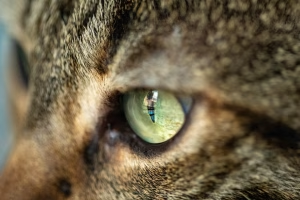
Expert Feline Ophthalmology In Central Scotland
View Referrals was founded by veterinary ophthalmologists Michael and Richard, who have spent their careers diagnosing and treating complex eye disease in companion animals.
Their extensive experience allows them to provide tailored treatment for cats with challenging corneal conditions, preserving their sight and maintaining a higher quality of life for your much-loved pets.
Refer Your Cat for Corneal Ulcer Treatment
If your cat has a suspected corneal ulcer, prompt veterinary assessment can make an important difference to the outcome. Your vet can refer your cat to View Referrals, or you can contact us for advice about our advanced ophthalmic care.
For urgent enquiries, please call 07344 407 630.
Our services include
Cataract Extraction Surgery
Corneal Grafting & Reconstruction
We perform intricate procedures to treat deep corneal ulcers, perforations and other corneal pathology, using techniques such as corneo-conjunctival transposition grafts.
Corrective Eyelid Surgery
Expertise in resolving painful conditions like entropion (in-turning lids), ectropion, and the removal of eyelid tumours or ectopic cilia. We are experts at performing eyelid surgery on cats, dogs, and a variety of other small animals.
Glaucoma Management
Cherry Eye Surgery
Surgical repositioning of the prolapsed gland of the third eyelid to maintain tear production and eye health.
Comprehensive Ophthalmic Assessments
Detailed examinations using slit-lamp biomicroscopy, tonometry (pressure testing), and chromatic Pupillary light tests to assess retinal function.
Many more things
If you pet has an eye problem, then we will be here to help.